Showing posts with label Punjabi Culture. Show all posts

How Lohri Related with Dulla Bhatti

Dulla bhathi,, jisda janam (estimated) 1570-1580, shekhupura jille ch hoya, Dulla ne around 1603 issvi nu apne pita farid, te dada saandal nu shehanshah akbar, te prince salim ( later jahangir) de hathon jaddo zulam hunda dekhiya te talwar chukkni payee, apne peo dade diyan laashan india gate , LAHORE ch bina skin to tangiyan dekhiyan sun, history ch likhiya ki Dulla 3 saal takk zulam de khilaaf larda riha, ameeran nu lut ke gareeban nu vand da riha, sun 1605 ch jad salim ( jahangir) nu taaj pehnaya giya, oss to ih na siha giya, ki 2-2 paase to zulam de khilaf aawaz uth rahi, GURU ARJUN DEV JI, apne shabdan te bani naal, te Dulla talwar di nok naal, mugalan de nakk ch damm kar rahe sun,,GURU ARJUN DEV JI di shahidi 1606 ch da te aap sabh jaande hi ho, history ch likhiya,, ki dulla guru ji nu milan LAHORE aaye,,,,aapa saria ne raj babbar ji di movie ,,, sardar udham singh dekhi hai,,, uss ch ,, 

amrish puri DURGA RANGEELA di aawaz ch geet gaunde aa,,, raj babbar nu dekh ke ,,hairani hundi aate kehnde hun ,, oye rabb diya bandiya,, tu kush bannega,,, khoob naam roshan karren ga,,,, darrassal oh scene di parerna guru arjun dev ji te dulla di assli kahani to layee gayee c,,,guru arjun dev g ne dulla nu dekh ke kiha c , ki khoob naam payega,,, kush karenga tu,,,,,,,jao parmatma da hath tere sir te hai,,,te guru ji ne dulla nu ih v kiha ,, ki jais zulam de khilaaf tu larrda hai na,,, oss zulam de hathon sada samah v aan wala hai,,,30 may 1606 nu guru ji ta shahidi pa gaye,,,par dulla ne guru ji da naam lai ke jung vadha diti,,, kush gorian di madad naal bomb powder lai ke ,, lahore shahar diyan main buildings tabah karnia shuru kar dittiya,,


te fir ikk din ohdi zindagi ch khushi da v aya,, history ch ih nahi dassiya ki dulla g da viah hoya c ya nahi,,,par ik din sun 1614 likhiya hai,,, dulla ne ik kudi di jiss da naam MUNDRAN C, ikk hakam de hatho izzat bachchayee,, puchan te kudi ne dassiya ki oss di koyee family nahi bachi,,, zulam de hathon sare khatam ho chukke hun,,,,te dulla ne oss kudi nu goad lai ke oss da viah kar ditta ,,,, kyon ki dulla da koyee tikana nahi c ,, janglan ch bhatkade firde sun,,, viah v jungle ch hi hoya,, roshni naa hon kaaran ,, bohut badi dhooni layee gayee,, te geet gaye gaye,,, jithon LOHRI shuru hundi hai,,


lok kudi nu geet di taraz ch puchde te gaunde,,,,,


kyon ki naam MUNDRAN c,,,,,,,,,,,,,,,,,,,


Sunder Mundriye,
Tera Kaun Vichara 
Dullah Bhatti Wala,
Ho
Dulleh ne dheeh Viahi,
Ho
Ser Shakar Payee ,,,,,,,,,,,,,,,,,,,,,,,,,,,,,,,,,,,,,,,,,,,,,


Posted in , , , , | Leave a comment

Punjabi Culture-Wallpapers


The Land of Five Rivers, Punjab, is described as the land of the Gurus, Pirs and the Warriors. It is the Cradle of Human Civilization, Sword Arm of India and the Bedrock of Wisdom that emerged out of the confluence of the man and the nature, symbolizing the unity of man, the unity of thought and the unity of spiritual experience. The cultural heritage of the region is not only one of the most ancient but it is also one of the most extensive and varied. To it have contributed, throughout the ages, many races and people, who have either temporarily come into contact with the land of 'Five Rivers', or have permanently settled within her borders and helping to evolve a distinctive Punjabi Culture, the keynote of which is synthesis on the-basis of eternal values.

Fairs or Melas in Punjabi are synonymous with the joy and gaiety; and in the countryside where the life follows a hard routine, nothing is more welcome to the people than the prospect of a festival or a mela. A rural mela in Punjab has a great significance. It is not just an occasion for festivity and mass gathering but it is an unbounded expression of the spirit of the inner freedom, of creative pride, of zest for life, and of colorful traditions of the people of Punjab. People come to participate in fairs from far-off places, trudging dusty distances. Most of the fairs are held in memory of a saint or a pir, and people from all communities living in a village participate in it. Men women and children of all ages, classes and creeds flock in hundreds and enjoy the numerous fascinating features of the fair; races, wrestling bouts, singing, acrobatics, etc. They play on folk instruments, such as vanjli and algoza.


Posted in , , | Leave a comment

The First ever Punjabi International Film Festival (PIFF) – Toronto 2012

Punjabi International Film Festival (PIFF) – Toronto 2012 presents the best feature films, documentaries and short films from around the world on themes of Punjabi culture and identity.The Festival is dedicated to using film for its contemporary popular value and accessibility in order to reflect the diversity of the Punjabi culture internationally.

PIFF – Toronto 2012 provides an opportunity to heighten awareness of Punjab and Punjabi Diaspora around the world to audiences of all cultural backgrounds, and to present films in their original languages with subtitles, in an effort to break down racial, cultural and religious barriers and stereotypes.

Posted in , , , | Leave a comment

Rural Punjab,Purana Punjab Wallpaper


Posted in , , | Leave a comment

No Fun Without Jaggo In Punjabi Marriage

This is a dance ceremony performed during the late hours before the wedding day. The bride’s female relations carry a decorated copper vessel called gaffer with lights or “dhiyas”made of wheat flour.


The aunt carries this vessel on her head and the other women follow her in group, singing and dancing their traditional giddha. A woman carries a long stick with bells or “ghungroos.”


They visit nearby relatives in the village where they are welcomed with foods, grains and ghee for lighting up the lamp.Jaggo dance is a procession to wake up and call the neighbours for wedding.


Punjabi culture does not merely symbolize the ancient Sikh legacy. The industrious Punjabis like to have a bit of fun at the end of a hard day’s work and thus their culture abounds in lively music and colorful dances. Jaago, a dance that is performed to celebrate the wedding festivities deserves special mention.

Jago’, the song of awakening is a traditional folk form of Punjab in which on the auspicious occasion of marriage, the girls carrying a pot (Gaggar) affixed with lightened candles sing ‘Jago’ folk song in the village streets. 

This tiny procession is always full of fun and frolic with the elders. The theme of song in the ‘Jago’ is social and sometime a message of awakening is followed by soft teasing. After the Jago, Viahola Giddha folk dance is performed.

Posted in , , , , | Leave a comment

Miss Europe Punjaban 19 May, 2012


Miss Europe Punjaban 19 May, 2012
Hallunda Folkets Hus Norsborg,
Stockholm Sweden

Posted in , , , , , | Leave a comment

Exhibition on Punjabis in California opens


Capturing the story of over 100 years of the small yet influential Punjabi community in the US, a multi-media exhibition celebrating its contribution has opened in a Sikh-dominated Californian city.

The first permanent exhibit of its kind in the United States, “Becoming American: The Story of Pioneer Punjabis and South Asians”, the exhibition opened over the weekend in the Community Memorial Museum of Sutter County in California’s Yuba City.

Known as the prune capital of the world, Yuba City has a sizeable Sikh community.

Posted in , , , , | Leave a comment

asssin tusin lassssi pissinnn!!!!

unlike the rest of the world punjab has its own variety of natural drinks lassi tops the list,,, followed by ganne da ras {sugarcane juice} and sattu{grampowder sweet juice] alcohol comes to least consumption but unluckily it is gaining ground in ppunjab as well.lets together stop its consumption, je glassy khadkani wi hai tan lassi di khadkao wai.....!!! bharawaan da dhaba at amritsar is famous for its lasssi,,, 

Posted in , , , | Leave a comment

Istri Manch activists hold dharna at singer’s house

 Flay Diljit for using indecent words in his songs


More than 500 activists of the Istri Jagrati Manch today staged a dharna in front of the house of Punjabi singer Diljit here. The Punjabi singer faced the wrath of women activists for his alleged vulgar song "15 Saal ton ghatt kudiye" in his upcoming album.

Women activists, who came from Jalandhar, Nawanshehar, Patiala, Ludhiana and Sangrur, also raised slogans against lyricists and singers of vulgar songs.

At the time of protest, Diljit was not present in his house. His cousin Kuldeep Singh said that Diljit was in Mumbai and would be back in a couple of days.

Posted in , , , , , , | Leave a comment

SINGER DALJIT DA JLOOS

Posted in , , , | Leave a comment

Punjab WOMEN AND FOLK-SONGS


WOMEN AND FOLK-SONGS 

A woman's sentiments are deftly woven into the fine fabric of the folk-songs of the Punjab. The main supposition at the back of these songs is that a woman has two lives and two minds, one for her parents and the other for her in-laws. She draws strength from both families. In her new home after marriage, she leans on the husband, whereas in the parental home her attention is concentrated more on the brother than anyone else.
 In all her childhood games, she idealises her brother, and after marriage, on all occasions of family celebrations, her brother brings her home from her husband's house. A Punjabi girl almost worships her brother. She is proud of him and custom has taught her to look forward to his visits, because on all festive occasions it 1$ the brother who brings gifts to her house.

And though she would like to show an extravagant hospitality towards her visiting brother, the inhibitions of the joint family stand in her way. She is afraid of the taunts of her mother-in-law.

Next to the brother it is the mother who is remembered most by the Punjabi girl for she is the sharer of her daughter's sorrows. A mother having borne much the same sort of suffering in her own life can understand her daughter's predicament best. The daughter comes to her and talks freely about the injustice and cruelty which she receives at the hands of her mother-in-law and sisters-in-law .

In her husband's home she is afraid of the mother-in-law's conventional tyranny. If the mother-in-law is good, life becomes a heaven, but what happens more often is that the cruel mother-in-law makes life a hell for her. She taunts her over small things, passes scathing remarks on her parents, brothers and sisters, and irritates her so much that her heart is filled with hatred for her. This dislike for the mother-in-law is expressed in many folk-songs of the Punjab.

SONGS OF TRINJAN


Women seldom sit idle in the Punjab. When they are free from household chores, they bring out their spinning wheels and sit out in the open under a tree. Women of all ages and from all houses of the locality sit together and spin, and as they spin they sing. This is a common sight in the villages. Sometimes on a winter night they all assemble at someone's house and keep spinning and singing throughout the night.

 These spinning sessions are called trinjan -the day session is known as Chiri Chirunga (sparrows big and small) and the night session is called Rat Katni (spinning at night). Sometimes there are spinning competitions among young girls with a chain of songs in the background. Spinning is seldom independent of the song. Spinning goes on accompanied by spontaneous, unrestrained music.

Trinjan songs cover all aspects of life particularly the long cherished dreams of a woman, her aspirations, fears, love longings and tuggings at the heart. These songs combined with the drone of the spinning wheel create an enchanting atmosphere.

SONGS OF TEEYAN

The festival of Teeyan is an occasion for all married girls to visit their parents for a few days, and thus enjoy again the carefree days of their childhood. They run to the swings on the peepal trees. It is fascinating to see the earth all round becoming green again, the welcome drops of rain falling, and the youthful girls in colourful dresses. The girls sing songs and dance Giddlia. Songs of Teeyati mostly speak of love, and are highly charged with emotion.

LOVE DITTIES 

Love lyrics comprise the best part of Punjabi folklore. The songs of this category express the ecstasy of union as also the pangs of separation. These lyrics are short and absorbing, the most popular among them being Bolian, Mahiya and Dhola. The natural exuberance of a Punjabi does not allow him to put any limits to his appreciation of beauty.

As popular as Boli is Mahiya, which presents an expressive picture of the torments of separation and the thrills of reunion. Dhola like Mahlya is an appealing storehouse of the softest sentiments.

Considering that for centuries the Punjabis had to bear the brunt of foreign attacks, it was natural that sometimes when young men went out to fight, the wives expressed a wish to go and brave it with them rather than stay back and suffer the torments of separation.

Some folk-songs have a historical significance and reflect the attitude of the entire community towards certain events. The Punjab has.been a frontier province and Punjabis have always suffered from the aftereffects of foreign invasions. Every invasion brought plunder, rape and arson in its wake.

There is a song which gives a heart-rending description of the cruelty of a marauder who forcibly carries away a beautiful young lady. Her husband, father and brother, in spite of their earnest efforts, fail to rescue her, and the brave girl, instead of falling prey to that brute's passion, burns herself to death. The entire poignant tale is contained in a ballad.

The invasions of Nadir Shah and Ahmad Shah Abdali created terror among the people of the Punjab. There are some songs expressing their indignation towards them. When the long enslaved Indians started their fight for freedom from the British yoke, the offended masters let loose upon them a bell of spiteful cruelty. Some folk-songs refer to these movements of rebellion in the Punjab.
Src.http://www.eknoor.net/literature-poetry.php

Posted in , , , | Leave a comment

The significant role of Mirasis or Bhand (jesters) in the cultural life of Punjab.


The significant role of Mirasis (jesters) in the cultural life of Punjab cannot be ignored. They were known as Bhand or Naqqal (actors), their profession being to make others laugh by enacting humorous anecdotes. 

They were mostly Muslims. They used to lead a very rough and rustic life, and formed a very poor section of Punjabi society. In times of yore, they were encouraged and patronised by feudal lords and sometimes found employment in big and small courts. They, entertained people with their pungent witticisms, mimicry ('Swang'! humorous and satirical dialogues, rough dances and pantomimes. They also enacted amusing scenes by using a leather strap called "Chamota" which was very similar to slapstick. They were good story-tellers.

In lean times, when patronage was lacking from aristocracy and nohility, they earned their livelihood by entertaining the commoners on weddings, betrothal ceremonies and other auspicious occasions. At times, they were invited by rich people or admirers to sing songs based on the theme of Raja Rasalu. These songs were known as Khioore. 


There was a common practice to invite two or more than two Mirasis and make them sit face to face to sing. They used to sing the whole night sitting on the terraces, one hand placed on the ear and the other extended in front. Such programmes were generally organised on full-moon nights. The whole' atmosphere used to get saturated with their musical strains.

It is unfortunate that all the colour and vivacity of everyday life in Punjab has vanished on account of partition. Those happy memories still linger in the minds of Punjabis who are above fifty years old. Only some families of Mirasis survive around Ludhiana and Jalandhar while the rest have given up their ancient art and have moved over to some other jobs to earn livelihood.

Posted in , , , , | Leave a comment

Phulkari -A Punjabi Folk Art


Phulkari, an embroidery technique from the Punjab in India and Pakistanliterally means flower working, which was at one time used as the word for embroidery, but in time the word “Phulkari” became restricted to embroidered shawls and head scarfs. Simple and sparsely embroideredodini (head scarfs) and shawls, made for everyday use, are calledPhulkaris, whereas garments that cover the entire body, made for special and ceremonial occasions, are known as Baghs ("garden").

Phulkaris and Baghs were worn by women all over Punjab during marriagefestivals and other joyous occasions. They were embroidered by the women for their own use and use of other family members and were not for sale in the market. Thus, it was purely a domestic art which not only satisfied their inner urge for creation but brought colour into day to day life. In a way, it was true folk art. Custom had grown to give Phulkaris and Baghs to brides at the time of marriages. Some best Phulkaris and Baghs are known to have been made in Hazara and Chakwal, areas of Northern Punjab inPakistan.


Some scholars feel that the art of Phulkari came from Iran where it is known as “Gulkari”. Some feel it came from Central Asia along with Jattribes who migrated to India and settled in Punjab, Haryana and Gujarat. There is reference of Phulkari in Vedas, Mahabharat, Guru Granth Sahib and folk songs of Punjab. In its present form, phulkari embroidery has been popular since the 15th century.

The main characteristics of Phulkari embroidery are use of darn stitch on the wrong side of coarse cotton cloth with coloured silken thread. Punjabi women created innumerable alluring and interesting designs and patterns by their skilful manipulation of the darn stitch. The basekhaddar cloth used in Western Punjab is finer from those of Central Punjab. Black/blue are not preferred in Western Punjab, whereas white is not used in East Punjab. In West Punjab, 2 or 3 pieces of cloth are first folded and joined together. In East Punjab, they are joined together first and then embroidered.

In Phulkari embroidery ornaments the cloth, whereas in Bagh, it entirely covers the garment so that the base cloth is not visible. The end portion of pallav of Phulkari have separate panels of exquisite workmanship of striking design.

The most favoured colour is red and its shades, because Bagh and Phulkari are used during marriage and other festivals. Red is considered auspicious by Hindus and Sikhs. Other colours are brown, blue , black, white. White was used in Bagh by elderly ladies. Silk thread in strands came from Kashmir, Afghanistan and Bengal. The best quality silk came from China.


No religious subject or darbar scenes were embroidered. Phulkari encompassed life in the villages. Creative ability of Punjabi women has produced innumerable and intricate geometrical patterns. However, most motifs were taken from everyday life. Wheat and barley stalk with ears are a common motif.


Posted in , , , | Leave a comment

Museum of Punjab Agriculture University Ludhiana


Museum of Punjab Agriculture University LudhianaThe Museum of Rural life of Punjab in the campus of the Punjab Agricultural University is one of the must-sees for any tourist of Punjab. This museum displays the Punjabi Culture to its best. The PAU is perhaps, the only university in India to have a museum like this.

The museum assumes much importance since the rural Punjab is changing fast. The old traditions and customs, which were rampant till the last decade, are now losing their stand with the intervention of the technology. Women fetching water in gaggars (the bronze pot) from the village well are no more seen. Old bronze utensils are now antique pieces. Spinning is no more done. Women do not embroider phulkari. In the fields with the arrival of advanced technologies, the electric motors and pumps have replaced the Dhingli and Charsa by mechanical threshers. All such traditional items, which once lent charm to the Punjabi culture, are now nowhere to be seen. But the university museum preserves them all for those who still want to cherish the old, lovely memories as well as for those who are anxious to know about rural Punjab.

The whole credit for building up this museum goes to Dr. M.S. Randhawa, the first Vice Chancellor of this University. It was he who conceived the idea and initiated the project. He decided suitable design for the building and collected the old objects from small ancient villages and towns like Sultanpur Lodhi, Rahon, Goindwal, Zira and Sunam.

Museum of Punjab Agriculture University Ludhiana
The museum is located at the back of College of Home Science of this University. The charges are minimal at Rs. 2/-. The museum is open on all working days of the university from 9 a.m. to 1.00 p.m. and 2 p.m. to 5 p.m.the museum has a beautiful facade. It resembles the traditional houses of rural Punjab. It lies in a 4000 sq. Yards area. The museum looks splendid while also maintaining the simplicity of rural life. A 100-yard long path, flanked on both sides by water channels, leads to the finely carved doors of the museum.

Interiorly the museum is divided into various sections. The very first room contains a collection of Harappan pottery and coins. Next is an open kitchen, which includes all the necessary kitchen equipment like a big paraat, an old type of Chulha (the hearth), a peerhi etc. Besides there are two dummies of housewives - one carrying a gaggar (the bronze pot) on her head and another rolling the chappatis. 

In a room on the left are placed old bronze utensils for cooking, eating, drinking and milking the cattle.The next room has other household equipments like grain storage bins, spinning wheel, other equipment for ginning, spinning, weaving etc. Besides this, there are pictures of village artisans by the artist Kehar Singh. A dummy of a lady making trouser string lies in the centre of this room.

Museum of Punjab Agriculture University Ludhiana


the next room one enters in contains a beautiful dummy of a house. Wife is grinding grains with the hand mill. This room also contains some home equipments and baskets made from reeds and date leaves. Outside this room in the verandah is a kuppa (a huge oil container).

The next section contains musical instruments like Dholak (the drum), and other string instruments like Sitar, Sarangi, Tumba and Algoza. The next compartment has a cradle for the baby, a large cot, a walker and other toys. Items that were given in the dowry, the vanity boxes, and the mustard oil lamp are all there. There is a dummy of a housewife churning milk. Then there is a well with all necessary equipment for drawing water. Next lies a small closet with items involved in religious ceremonies.

Museum of Punjab Agriculture University Ludhiana
After passing through another room containing decorations and harnesses, saddles and Jhuls for cattle, horses and camels, we come to a section that contains traditional agricultural implements.

The balcony built primarily for display of Phulkaris looks fabulous. There are dummies of 7-8 housewives embroiding the phulkari. There is another dummy of a bride sitting in a Dola just about to leave her parents home. Representation of Bhangra Dance of Punjab is done through toys. The typical dress of a Punjabi lad and lass are on display. The jewelry and the Punjabi Jutis (foot-wears) are also displayed in showcases.

This museum reveals the true picture of rural Punjab. All the visitors thus are much enthralled by its splendor.

Posted in , , | Leave a comment

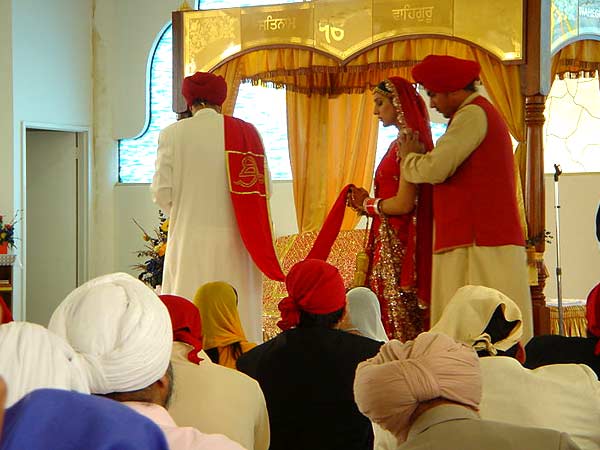
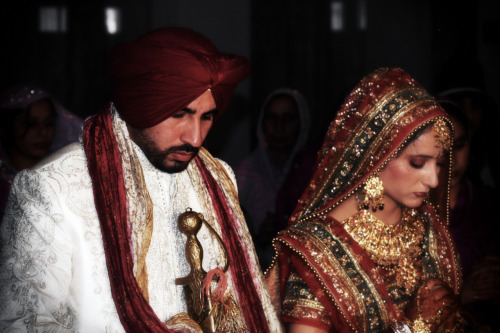
Punjabi Sikh Wedding De Riti-Riwaz

,VIAH TON PAHLAN :(Before Marriage In Punjab) 

Bhocha torna : Viah di sab ton pahli rasam shuru hoyee bhocha toran ton. Bhocha torna means ladki di family formally ladke di family nu viah te invite kardi hai.... jisda matlab hunda hai ki aj ton hun tusi v viah diyan sariyan tyaariyan shuru kar deyo.Bhoche vich ladke de ghar gandh chithi(formal inviation), a lot of dry fruits,mishri, vichole vicholan de kapde, mithaeee etc. bhejeya janda hai.

Daaj de kapde bnana : bhocha toran ton baad viah diya baaki tyariyan shuru ho jandiyan ne.Us ton baad ghar de saare jee ikatthe hoke kudi Suits di shopping karan jande ne. jo kapde ladki apne gharo laindi hai ohna nu daaj te jo ladke ghoron aunde ne ohna nu Wari kahnde ne. 

Daaj de suits di ginti 7, 9 , 11 , 13 ya 15 ho sakdi hai(same for Wari)

Saureyan ton shagun auna : fir vicholan ladke waleyan de gharon ladki layee shagun laike aundi hai. Shagun vich ladki layee kujh suits(that is part of Wari), make up kit, mahndi, mishri, dry fruits, makhane, ladke di puggdi, fulkari, kudi de veer da joda,shagne paun layee laal ribbon,gold set etc. smaan hunda hai.

Punjabi Sikh Wedding De Riti-Riwaz

Shagne pauna : Fir ik din pind(village) vich sab nu sdda bhejeya janda hai ki aj kudi nu shagne pauna hai.Pind diya aurta thaliyaan vich kanak ya munji(jeeri) pake leaundiyan ne.jo shagun di rasam ton baad pind di painchni(raani) laike jandi hai.Fir kudi nu ik lakdi di fatti (patra) te saje pair di tali heth kujh paise rakhke bithaya janda hai. Shagun de smaan 

chon kangi te ribbon laike usdiyan midiyaan karke gutt kiti jandi hai. Kudi nu shagun ch aya make up da smaan laya janda hai.usnu shaugun wale gahne pake us te fulkaari diti jandi hai.Fir bharjayian usde hath te thodi mahndi lake usdi jholi kujh mitha(badaana, te mishri etc.) paundiyan ne te usda muh mitha karwaundiyan ne. Usde muh chuhara lagwake usnu fatti to utha leya janda hai.Maneyan jandahai ki usda jootha eh chuhara jo v khayega usda viah v chheti hi ho jayega.Pind diyan aurtaan nu ohna diyan thaliyan ch badaana te shagun ch aaya 

dry fruit, mishri, makhane etc pake dite jande ne. Kudi diyan saheliyan nu thuthi(half coconut) ch eh sab paake dita janda hai.Fir kudi jholi peya smaan sab nu vand-di hai.

Mayian pauna : fir next day or same day, mayian di rasam hundi hai. Fir kudi nu lakad di fatti te saje pair thale paise rakhke bithaya janda hai. Shagun wele kitiayan midiyan te gutt kholke ajj dobara usdi gutt kiti jandi hai. bhabhiyan usnu changi traan vesan da vatna 

maldiyan ne. fir ik bhabhi kudi nu shagna da gaana ban-di hai.eh gaana viah ton agle din munda kholda hai. kudi di jholi vich hun ghunghniyan(ubaali hoyee kanak) te gud paya janda hai. Usda muh is naal mitha karwake usnu fatti ton utha leya janda hai.Fir kudi jholi peya smaan sab nu vand-di hai.

Mehndi lagwana : viah ton ik do din pahlan kudi de shagun ch aayee mahndi gholi jandi hai. Fir kise mahndi laan wali nu bula ke ohh mahndi kudi nu te baaki sab saheliyan te rishtedaara nu layee jandi hai.(Ajkal kudiyan us mahndi da sirf shagun kardiyan ne, te khud mehndi beautition ton hi lagwake aundiyan ne )

Punjabi Sikh Wedding De Riti-Riwaz

Choorha(or chooda) chadaana : viah ton pahli raat ya fir swere khaare(bath) chadaan ton pahlan kudi nu maame walon Choorha(or chooda) chadaya janda hai.Kudi da mama Choorha(or chooda) laike aunda hai. ik praat vich kachi lassi (mix water and milk) pake us 'ch Choorha (or chooda) dhoke, maama 5 5 churiyan karke kudi de dove hathi Choorha(or chooda) paunda hai.Choorha(or chooda) chadake maama bhanevi nu kujh na kujh shagun paunda hai.

Khaare chadaana : Choorha(or chooda) chadaun ton baad khaare chaadaan di rasam hundi hai.khare chadaana means nvaana (or ishnaan karwana).Kudi nu ik fatti te bithaya janda hai. kudi diyan bharjayian us nu vatna lake, usde sir vich dahi paake , usnu changi tran nvaandiyan ne. Fir kudi navaa suit paake tyar hoke use fatti te khadi ho jandi hai. Kudi udon tak us fatti ton niche nahi utardi jadon tak maama usnu kujh shagun ya gift de ke khud uthon utaar ke na laike aave. Fir maama bhanevi nu kujh shagun de ke chuk ke fatti ton niche utaarda hai.

Munde nu shagun laan jaana : Viah ton ik din pahlan kudi de ghar wale munde nu shagun laan jande ne. Kudi de pita ji munde te usde saare parivaar layee kujh bhetaan laike jande ne. Uthe munde nu sindoor da tilak lake usdi jholi goom(coconut)te shagun da baaki smaan pake rasam poori kiti jandi hai.

Jaago kadni : viah ton ik din pahlaan kudi diyan maamiyan jago kad-diyan ne. Pital di ik gagar nu aate de dive bnake badi achhi tran sjaya janda hai.fir maamiyan saare dive baal ke dadkiyan te hor rishtedaara nu naal laike jago kad-diyan ne. Is doraan nankiyan te daadkiyan ch ik mithi ji nok jhok chaldi hai. Jaago nu jaan pahchaan de sare gharaan ch lai jaya janda hai. Ghar wale jaago ch tel paande ne te jaago leaun waleyan nu gidha paun layee kahnde ne.jago wale jinna jinna de ghar jande ne ohna de paani wale parche te kachiyan chullaan bhanke aunde ne.fir last ch ik chhajj bhan ke jago vapis ghar laiaundi jaandi hai.

Sehra Banana te Surma Pauna : viah vale din munde nu tiyaar karan to baad usde sehra banyea janda ha jo ki munde diya bhaina (sister's) bandiyan ne,sehre de uppar kalgi v sajai jandi ha .us to baad munde dian bhabiyan usde surma paundian ne, te fer us nu ghori charyea janda ha .te sagana de geet gaye jande han.

VIAH WALA DIN :

Milni karna : viah wale din braat de aun te sab ton pehlan Gurdware de bhai ji walon ardaas kiti jaandi hai. Fir doven gharaan de rishtedaara vich milni hundi hai. Like kudi de pita ji munde de pita ji de gall ch haar pake ohna nu koi bhet de ke ohna da swagat karde ne. Ise tran chacha, maama, masar, fufar, veer, jeeja etc. sab di milni hundi hai.

Ribbon ktayee(or saliyan da naaka) : kudi diyan bhaina(sister's) braat de rah vich ik ribbon lgake khadiyan ho jandiyan ne. Munda ribbon katke hi andar ja sakda hai. Par ribbon kattan ton pahlan munde nu apniyaan saliyan nu muh mangeya shagun de ke khush karna painda hi. Taan hi oh usda muh mitha karwake usnu ribbon katan di permission dindiyan ne. Is time kudi diyan bhaina te munde te usde dostaan vich pyaari ji nok jhok te hassi majak hunda hai.

Ladies di milni: braat de andar aun te ladies di milni di rasam hundi hai. Jithe kudi di maa munde di maa de gall haar paake, usdi jholi dry fruit, mishri, makhane etc paake usnu koi bhet de ke usda swagat kardi hai. Ise tran ghar diyan baaki aurtaan di v milni kiti jandi hai.

lawaan di rasam : braat nu cha paani peya ke kudi te munde de kujh najdiki rishtedaar dovaan nu lawaan di rasam layee laike jande ne.Lawaan di rasam layee kudi apne mapeyan naal Gurdware aundi hai te munda apneyan naal. Dovan de aun te Bhai ji dovan nu DARBAAR sahib de sahmne baithan layee kahnde ne te uthe rasma shuru hundiyan ne.

sab ton pahlan munde de pita ji usda sehra vdhaun di rasam karde ne.(Darbaar Sahib sahmne munda kalgi te sehra sjake nahi baith da, so usde pita ji usnu utaar ke DARBAAR SAHIB de sahmne rakh dinde ne). 


Fir Bhai ji Ardaas karde ne jis vich sirf munda, kudi, dovan de mata te pita ji hi khade hunde ne. Baaki sab baithe rahnde ne.Fir palla fadaun di rasam hundi hai. kudi de pita ji munde da palla (Dupatta that he is wearing around his neck) kudi de hath vich fdaunde ne.

Is ton baad Bhai ji chaar lawaan da path karde ne. Te kudi munda bina kisi di madad de(pahle dina vich kudi nu sahara den layee lawan wele usde veer khade hunde c, par hun is di permission nahi hai) khud hi chaar lawaan SACHE PATSHAH di mehar naal puriyan karke ik pavitar rishtey vich bajh jande ne.

Fir kudi de pita ji dobara palla kudi ton vapis laike munde nu fda dinde ne. Fir kujh der Raagi kirtan karde ne, te saare munde te kudi di khush-haal zindagi layee duya karde ne.

Jutti lukayee : Lawaan lain layee munda Gurdware de bahar apni jutti utaar ke janda hai. Par kise tran kudi diyan bhaina Jutti luko laindiyan ne. Munde nu Jutti vapis lain layee apniyan saaliyan nu kujh shagun dena painda hai.Is ton baad kudi munde de naal vapis viah pandaal wali jagah(ghar ya palace) jandi hai, jithe saare rishtedaar ohna dovan di jholi shagun paunde ne.

Dhudh pilayee : Shagun puan ton baad munde nu kudi diya bharjayian dudh pilayee di rasam layee laike jandiyan ne. Uthe munde nu te usde naal de kujh 10 -12 dosta, veeran nu 1 ,1 gilaas dudh da pilaya janda hai. Munde nu kudi di bharjayee nu is layee kujh shagun dena painda hai. Uthe hi kudi di bhain nu munde walon gold ring payee jandi hai te baaki sab saheliyan te bhaina layee chandi de chhalle dite jande ne.

Doli turni : shaam nu doli tori jaandi hai. kuri ik thali cho chaul chuk ke apne sir uton di pichhe sutt-di jandi hai.fir apne saare rishtedaara nu mil ke, apne sab close ones nu chhadke jaan de gam ch bhaari mann naal babul gharon vida ho jandi hai.

Punjabi Sikh Wedding De Riti-Riwaz

Fera pauna : pehlan viah ton duje din jake kudi da veer usnu saure gharon laike aunda c tan ki ohh sab nu dobara mil sake. Is nu muklaawe jaana ya fera pauna kahnde ne.ajkal sab kol time di kami karke viah wale din hi eh rasam kar diti jandi hai. Kudi da veer doli turan vele usde naal hi janda hai. Fir oh apne pind di juuh lang ke kise Gurdware ch matha tekde ne. Uthon fir munde doli wali car vapis uthe hi aundi hai jithon doli turdihai. Uthe kudi de sab rishtedaar khade wait karde ne. Kudi da veer fir uthe hi utar janda hai te kudi sab nu ik vaar fir milke vida hundi hai.

Mathha tekna: Saure ghar pahunch ke pahlan kudi te munde nu Gurdware matha tikaan layee laike jaya jandahai. Taaki ghar pair paun ton pahlaan Parmatma da ashirwaad mile te ohh apni new life sukhi sukhi shuru kar sakan.

Punjabi Sikh Wedding De Riti-Riwaz

Tel dhalayee : Munde de ghar sab ton pahlan us pind di nain bahar wale buhe te tel dhaaldi hai. Fir new viahee dulhan ton kujh shagun laike hi raah chhadd-di hai.

Paani vaarna: fir munde di maa apne nuh putar de sir ton paani te gud vaardi hai. Munda maa nu paani vaar ke peen ton rokda rahnda hai te maa peen di koshish kardihai. Fir 5 vaar varan te ohh maa nu khud hi paani pilandahai ki hun maa rajj ke pi lai. Ise tran hi gud varan vele 4 vaar rokda hai te 5 vaar khud hi hath lake khawanda hai.

Muh vikhayee : Fir munde de ghar sab valo navee nuh(bahu) nu muh vikhaye da shagun paya janda hai.

Churi diya grayiana(nivala) khawana : fir kudi di sass makhan te shakar rla ke churi bnake laiaundi hai. oh pahla 5 vaar pane putar nu hatheli te grayian dindi hai jo oh ik ik karke kha lainda hai.Fir same tarike naal hi kudi di hatheli te v thodi thodi churi rakhi jandihai jo ohh har vaar kha laindi hai. Pichhe khadiyan sab aurtaan gaundiyan rahndiyan ne :

"grayian lai lai ve sass ne ghaleya(bhejeya) bhukha

grayian lai lai ve sass ne ghaleya(bhejeya) bhukha"

"grayian lai lai ni maa ne ghalee(bhejee) bhukhee

grayian lai lai ni sass ne ghalee(bhejee) bhukhee"

Gode bithayee : Fir munde da chhota veer apni navee bharjayi(bhabhi) de gode te (godi ch) baithda hai.oh baithan lage bhabhi nu kujh shagun dinda hai. Bhabhi us nu apne gode ton uthaan layee jinne deor ne dite ne us ton double shagun dindi hai, tan hi oh uthda hai.

kalire khulayee : fir munde di bhain apni bharjayi de kalire kholdi hai. kudi apni nanaan (nanad) nu apni khushi naal kalire khulayee da kujh shagun dindi hai.

Paggdi jholi puana: fir munda apne sir di pagg lake apni bhain di jholi paunda hai, te naale usnu shagun dinda hai.

Gaana khedna : viah wale din hi ya fir agle din gaana khedan di rasam hundi hai. Munde te kudi diyan bharjayian ne mayian vele ohna nu jo gaane bane c oh dovan ne ik duje da kholna hunda hai. Jo kholan te ghat time lgaundahai oh jit gya fir ik praat vich kachi lassi paake us ch ganne, ik rupya, te ik ring dubo diti jandi hai.te dovan ne ring te baaki saara smaan labhna hunda hai. jis ne sab labhke chuk leya oh jit gya. Eh 5 vaari kita janda hai.Dovan de gaane khedan ton baad munda gaane te kujh hor paise kudi di jholi ch paunda hai te kahnda hai 

"khatti kamai main teri jholi paayee"

fir ik praat vich chaul pake launde jande ne. Ohh vaari vaari munde kudi ne buk (doven hath ikathe karke) bharke ik duje di jholi paune hunde ne. Is ton vekheya janda hai dovaan da dil kinna nu vadda hai.Eh v 5 vaari kita jandahai.Fir ise traan buk bhar ke sass nuh ik duji nu dindiyan ne. Eh v 5 vaari kita jandahai.

VIAH TON BAAD :

Got-knala ya lassi pair pauna : ik din mundfe de saare pind vich sda dita jandahai ki ajj got kanala karnahai, jisnu kujh pinda ch lassi pair pvaana v keha jandahai. Pind diyan aurtan nu den layee rang wale mithe chaul bnaye jande ne. us din sass navee ayee nuh de pair kachi lassi ch dhondi hai.Pind diyan aurtan thaliyan ch kanak ya munjhi(jeeri) laike aundiyan ne. sariyan aurtaan kudi nu muh vikhayee da shagun paundiyan ne te thali h mithe chaul puake laike jandiyan ne.

Peti khulayee : Fir kudi apne Daaj de saare suits vikhandi hai. Aisa karn layee oh apni nanaan nu suit vikhaan layee kahndi hai. jis nu peti kholna bolde ne. Is vaste nanaan apni bhabhi de suits 'cho jo usnu achha lage ohi suit chukk sakdi hai.

Trivenda jana : Kujh din baad kudi de veer usnu usde peke laike jaan layee aunde ne. Is nu trivende da fera pauna keha janda hai. Munde de parivaar walo lain aye jeeyan nu kujh na kujh bhet diti jandi hai. 

Trivenda to vapis jaana : Kudi jadon kujh din apne peke rahndi hai tan us ton kujh din baad munda te usde parivaar wale kudi nu lain aunde ne. Us din kudi de parivaar wale ohna nu kujh na kujh bhet dinde ne. 

Kamm laana : saure ghar ik din kudi nu kamm laya janda hai. Isda matlab hundahai ki us tron pahlan oh koi kamm nahi c kar sakdi, usne sirf araam karna c, par hun je oh chahe tan lod pain te rasoi ch dujeyan da hath vta sakdi hai, ohna di help kar sakdi hai. Kamm lvaan layee  kudi nu 5 ya 7 pede (roti pkaan layee) karan layee, te khaan layee kujh mitha bnaan layee keha janda hai.Fir kudi ghar de sare jiyaan nu khana serve kardi hai. pyaar te shukraane vajo ghar de saare jee usnu shagun paunde ne.

Ehne din tak kudi apne saure parivaar vich kaafi achhi traan rach mich jandi hai. Is ton baad koi khaas rasam nahi hundi te sab viah de mahol cho holi holi bahar aa jande ne.Mainu inj lageya jive main eh sab likhde likhde fir ton viah wale din ch pahunch gayee c....

Posted in , | Leave a comment

Punjabi Earthen Stove (Chulla)

The Earthen Stove (Chulla)

The Earthen Stove (Chulla)

Most households in Punjab have this type of Stove (Chulla) as a secondary or primary source of cooking food. Chulla is made out of special type of clay. You don’t need natural gas or electricity, just fire up the stove with wood and dung cakes.


Hands that fashion tandoors


Modern kitchens have come a long way from the days of the earthen stove (chulla) to the present day microwaves. Despite the changes, importance and significance of tandoors has not diminished. They are still relevant and inseparable part of Punjabi culture. But we hardly give a thought to the hands that fashion them.

The Earthen Stove (Chulla)“Hands covered with wet mud, sitting on the floor, sweat on her forehead, duppata tied tightly to cover her head, fingers trying to make something” portraits a clear picture of a tandoor maker.

Since generations women of low-class families make tandoors while their rakshaks (their husbands) work as rickshaw pullers. Boys of the family work in mills and factories and a few interested girls of the family go out to study but none of them clean and sweep houses to make a living. Making tandoor is a means of livelihood for them; a small cottage industry.

However, they are concerned about their ‘art’. “We think this art of making tandoor is going to die soon as our daughters and even our daughter-in-laws are not interested in sitting in the sun, letting their hands get smeared with mud; for them this is just a waste of time.

These young girls can’t understand that this is our age-old art and work which has enabled us to live” said a tandoor maker.

They make tandoors in all sizes - from small to big. Small ones are sold for Rs 80 to 100 while the cost of medium and big ones varies between Rs 200 to Rs 250. Tandoors are not only made for local people but it is also exported and this made them proud for their art and profession. “We feel good that these big hotel people make use of our tandoors,” adds another woman.

But during rainy seasons they have to toil hard to save their tandoors from getting damaged. “When it rains and our tandoors get broken, although we try to save them by covering them with plastic sheet but many times it serves no purpose. We can’t take them inside our houses as we have very little space’ said another woman.

Generally tandoors bought by dhabas and hotel people and even by the housewives in two or three months. However, sometimes they have to wait long to sell them. She said earlier it was easy to run the family with the income generated by selling tandoors but now it had become hard now.

Fighting against poverty, miserable living conditions, and hunger, surviving against odds, trying to earn their livelihood and carry on with their tradition to making tandoors, these women display courage. Living in single rooms of mud, these women work hard to cope with their lives but there is no tension or sign of depression on their faces.

They are happy and contented with their simple life

Posted in , | Leave a comment

Patiala Suit - (Punjabi Virsa)

Patiala SuitPatiala salwar kameez are taking the fashion world by storm nowadays. Their stunning silhouette has swept away hearts of many women. Loose fitting, comfortable yet fashionable is their eye catching part. Their one fleeting look is sufficient to imprison your attention.

Basically it is a dress from Punjab but its enticing appeal gradually has made an impact in other parts of India as well. Many women have adopted this self-effacing outfit as it is just the right mix of traditional as well as stylish look.

Patiala Salwar Kameez or Patiala Suit has a special historical background. There is a legend behind the name. Patiala is a place in Punjab in North India. In olden times, the Maharajas (King) of Patiala were very famous. Their dress was a pleated and baggy type salwar with long loose kameez in full sleeves. The dress emanated ethnicity, culture as well as royal comfort. In the new modern era, women copied this dress and named it Patiala Salwar kurta or Patiala Suit.
Patiala salwar kameez has pleats on the salwar in a falling manner. This draping effect imparts an attractive look and the drape falls like a fluid. It is worn with a short and tight kameez for balancing the ratio. Just like other salwars, patiala salwar also has drawstring waist. Falling pleats of salwar provides ease on wearing it.

Patiala Shahi Salwar
Patiala salwar kameez actually look like this. It has printed salwar as it is the main pattern of the dress. The dupatta has phulkari work in satin or silk threads while kameez is basic, uncomplicated, fitted and is high above knees. Go for cotton fabric to look stylish in this fabulous outfit. There are specific figures of women on which this fashion looks remarkable. For pear shape figures, it does wonders by camouflaging their bottom weighty part with the drape and pleats. It is very fine wear for the summer season to remain cool due to its comfy and slack fit
There is no stringent set of rules for the designs and patterns for sleeves, neck designs, front and back neckline depth and curves and cuts. Patiala salwar is very comfortable to wear because of its wonderful fit. The whole set comes in variety of fabrics, colours and patterns starting from plain, printed and embroidered designs. This is a very common dress for Punjabi ladies in India and abroad.

Patiala salwar kameez can be kept plain or can be embellished depending on the event. It can be embellished with diverse works or embroideries like sequins, stones, beads, lace, thread, patch work and so on. When it comes to footwear flats, chappals, kolhapuris or juttis are be worn as they showcase your femininity even better.

Posted in , , | Leave a comment

Great Sikh Painter S.SOBHA SINGH

S.SOBHA SINGH
SOBHA SINGH (29 November 1901 - 21 August 1986), famous Sikh painter, well known especially for his portraits of the Sikh Gurus was born on 29 November 1901 in a Ramgarhia family of Sri Hargobindpur, in Gurdaspur district of the Punjab. His father, Deva Singh, had been in the Indian cavalry.

Sobha Singh was skilled in the western classical technique of oil painting. His themes came from the romantic lore of the Punjab, Indian epics and from the Sikh religious tradition. His paintings of Punjabi lovers Sohni and Mahinval and Heer and Rahjha became very famous.

Sohni Mahinval was rated to be a real masterpiece; its impact upon the Punjabi consciousness was of a lasting nature. What gave Sobha Singh the utmost satisfaction was his paintings of the Gurus of the Sikh faith.
Above painting will be sold on March 24 sale of Indian and Southeast Asian Art at Sotheby’s New York.

Portrait By Sobha Singh

The base price of Maharaja Ranjit Singh's Portrait has been kept at $3-4 lakh .


Numerous awards and distinctions were conferred on him, the prominent being the title of State Artist of the Punjab Government in 1974 and the Padma Shri of the Government of India in 1983. He was conferred upon the degree of Doctor of Literature (Honoris Causa) by Punjabi University, Patiala.

A Girl Portrait By Sobha Singh

The Ministry of Information and Broadcasting released a documentary film titled Painter of the People based on his life and works. The British Broadcasting Corporation also made a documentary on him in 1984. Indian Government issued postal stamp in honor of Sir Sobha Singh in 2001.

Heer Ranjha Portrait By Sobha Singh

Posted in , , | Leave a comment
Related Posts Plugin for WordPress, Blogger...